Solid Wood Closet Organizers & Wood Closet Systems
Wood Closet Organizers made of real solid wood. Our wood closets are authentic solid wood closet systems!
No particle board, mdf or melamine with formaldehyde in our solid wood closets!


Why Lundia Is the Only True Solid Wood Closet System
Most "wood" closet systems on the market today are actually made from plywood, particle board, MDF, or imported rubberwood. Lundia USA is the only manufacturer building closet systems from 100% real, solid American hardwood — right here in the United States.
| Feature | Lundia USA | Typical Plywood Brands | Imported Rubberwood Brands |
|---|---|---|---|
| Material | 100% Solid Hardwood Maple & White Pine | Plywood or MDF with Melamine or Veneer | Rubberwood (finger-jointed) |
| Made In | United States | Varies | Imported from China |
| Contains Glues & Resins | No | Yes | Yes |
| Formaldehyde-Free | Yes | Depends on grade | No Factory Data |
| Real Wood You Can Finish Yourself | Yes | No | No |
| Modular & Reconfigurable for Life | Yes | Limited | Limited |
| Manufacturing Heritage | Since 1957 | Varies | Varies |
Based on publicly available product information from competing brands. Lundia has built closet systems in the USA since 1957.
Complete Solid Wood Closet Systems From $2,288 – $7,714
Pricing depends on closet size and finish. Below are three real example closets with full component lists and totals — from a compact reach-in to a large walk-in. All prices are for 100% real solid wood.
What Customers Say About Lundia Solid Wood Closets
“I am delighted to recommend Lundia Closet Systems. Everything was impeccable, seamless, and well thought out — frankly the best design I have ever seen, not just for closet systems but for any product. I am a fussy, picky, demanding and critical consumer, and I have not found a single fault with this product. I give Lundia my very highest and unequivocal recommendation.”
“We have finally finished installing our closets and I am very happy to say that they look GREAT! The material is top quality and the stain finish blends perfectly with our log home decor. It is obvious that your closets were professionally made and packaged. We are extremely glad that we chose your company over previously considered ones for this project.”
“We shopped locally and online for a closet system as custom a design as possible AND wanted real wood, NOT plastic covered particle board. Custom wood cabinet makers were prohibitively expensive — Lundia was a great alternative. The finished product is clearly well made, engineered, inspected and without defects. Very happy overall with Lundia!”


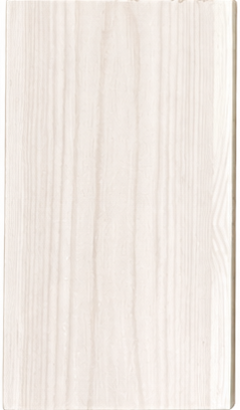
Solid Wood Closet in Painted White
Solid Wood Closet in Painted White


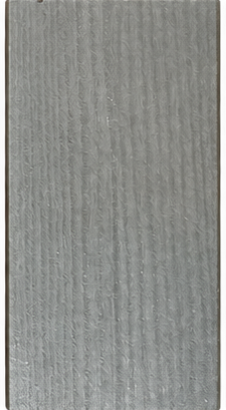
Solid Wood Closet in Gray Wash
Solid Wood Closet in Gray Wash


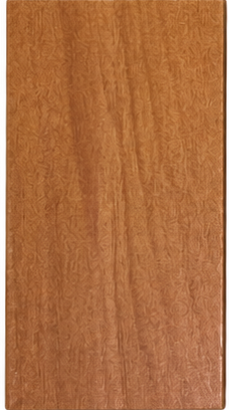
Solid Wood in Natural Clear
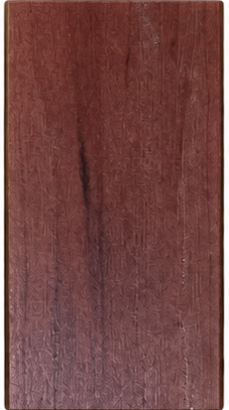
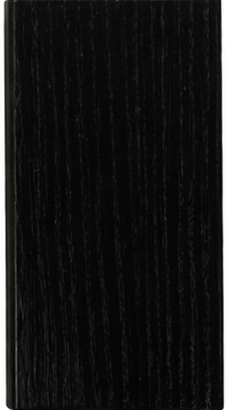
Solid Wood in Black
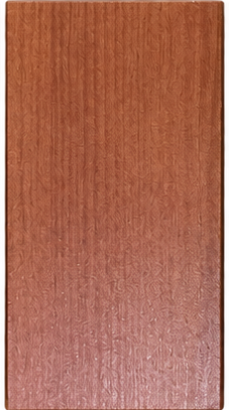
Solid Wood in Pecan


These are real photos from Particle Board, MDF and Melamine Manufacturing Plants


Particle Board
Chunks of wood mixed with formaldehyde resin & baked to form a rigid panel

Particle board is made of thousands of small wood chunks glued together with formaldehyde resin. It is the least expensive material for making wood products.

Particle Board is the core panel that is used for melamine panels.

Melamine
Particle board with printed or colored paper applied to look like wood

Melamine is simply particle board or MDF with a printed paper material attached to one or both sides of the particle board. It is the least expensive material for making wood products with a simulated appearance of real wood.

Melamine — This is the material used by California Closets, Closets by Design, Closet World, Container World, Ikea, Closet Maid and Home Depot.

MDF
Medium Density Fiberboard. Very small wood particles glued together with formaldehyde resin.

MDF is particle board made with extremely fine wood particles instead of wood chunks. The benefit of MDF is that it is stronger than standard particle board and can be routed and/or painted. However, standard MDF contains more formaldehyde as more resin is needed to bond the smaller particles.

MDF is commonly used by cabinet makers as a lower cost alternative to plywood and covered with paper melamine, plastic laminate (HPL) or actual wood veneer.

Plywood
Layers of wood glued together to form a rigid panel

Plywood is several layers or ply's of wood that are all glued together to form a plywood panel. There are numerous quality levels of plywood depending on the material, the amount of layers and the glue used to make the plywood. Glue on standard plywood contains formaldehyde, although not nearly as much as particle board. Glue on Soy Based Plywood is made out of soy bean and contains no formaldehyde.

Plywood is the material used most often by cabinet makers for custom cabinetry. This is typically considered the best material next to solid wood.

Solid Wood
Wood is cut from the tree. Nothing else is added or needed.

Solid Wood is cut directly from the tree and milled to different thicknesses. It is then surfaced/planed into dimensions prepped for final use....typically made in 3/4", 1", 1 1/4" and 2" thicknesses for cabinet use. The lumber industry describes the thickness of solid wood in "Rough" dimensions after it has been cut in the mill but before it is surfaced smooth into it's final thickness. That is why a 2" x 4" is actually only 1 1/2"thick. It was cut at 2"thick before being surfaced smooth.

Solid Wood is the material used by Lundia USA (aka WoodClosets). It requires more skilled labor and much more involved manufacturing processes. A cabinet frame made out of melamine/particle board will have 4 pieces. That same frame made out of solid wood will require 14 separate solid wood parts.

California EPA Report on Particle Board
California's EPA report on Particle Board (PB) dated April 26, 2007 confirms:
"Childhood risk (9 years): 23-63 cancer cases per million" "Lifetime risk (70 years): 86-231 cancer cases per million"
CARB Compliant Particle Board Phase 1 will only reduce the cancer cases by 12 to 35 cases.
Important Facts About Solid Wood Closet Organizers vs. Particle Board
Compare materials from the top manufacturers:


Mudroom

White Solid Wood Closet

White & Gray Solid Wood Closet

Mix and Match any Finish!


From Oprah.com
Some experts recommend keeping pressed-wood furniture out of kids' rooms to lower their asthma risk. "If it smells," Rudel says, "don't buy it."

- BuildingGreen.com – "Is Particle Board Deadly?"
- TheBestOrganicLifestyle.com – "Is Furniture Toxic? What You Need to Know"
- KeeperOfTheHome.org – "How to Protect Your Family from the Dangers of Formaldehyde"
- California Official Website – "Formaldehyde in Furniture Warnings"
- Oprah.com – "Are Toxins in Your Furniture Making You Sick?"

Excerpt from the USA Consumer Protection Agency 2015 Update:
Why should you be concerned?
Actual Quote:
“Formaldehyde exposure may potentially cause a variety of symptoms and adverse health effects, such as eye, nose, throat, and skin irritation, coughing, wheezing, and allergic reactions. Long term exposure to high levels of formaldehyde has been associated with cancer in humans and laboratory animals. ”


What You Should Know About Particle Board & Formaldehyde
All particle board materials have two things in common:
- They are the cheapest materials to manufacture with.
- They all contain formaldehyde as part of the glue that binds wood chips together.
Most closet organizers are made of particle board. While some may claim to use "solid wood," they may actually be using engineered wood or particle board with veneer.
What is Formaldehyde and Why is it Dangerous?
Formaldehyde is a colorless gas released by fossil fuel combustion, tobacco smoke, fireplaces, and particle board.
Health effects can include nose and throat irritation, burning eyes, wheezing, difficulty breathing, and asthma symptoms. Some may experience fatigue, headaches, or nausea.
“Formaldehyde is also a known human carcinogen.”
— California Environmental Protection Agency
TIP:
You may leave your new particle board product in the garage for a few days to let it off-gas before bringing it inside.
— California Air Resources Board
The Truth About “Solid Wood” Claims
While shopping for a closet organizer, you may come across websites or companies calling their product “Solid Wood” when in fact it is made of particle board (sometimes referred to as “engineered wood”).
This is misleading. The term “solid” is misused to imply the product isn't hollow, but the material is still bonded chips and sawdust — not solid lumber.
The main advantage of particle board is its lower cost. It is made of scrap wood particles glued together to form a board. However, it is brittle and will often break if hit with force (especially on corners).
This is why a fine piece of furniture built in 1930 often outlasts a brand-new one made in 2008.
Particle board can be made to look like beautiful wood by laminating it with veneer or printed wood patterns — but don’t be fooled.
What Others Say…
Excerpt from Wikipedia:
Particleboard is cheaper... and is substituted... when appearance and strength are less important than cost.
Our finishes are priced in four categories — Category 1 is the least expensive, Category 4 is the most. Each finish below shows its category.
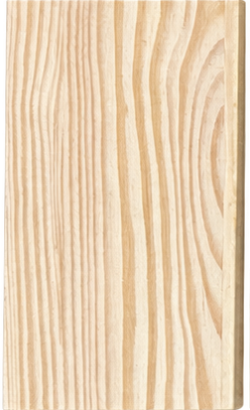 Unfinished
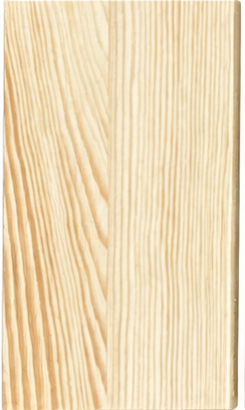 Clear
Clear